Indoor comfort is important in homes, offices, shops, hotels and other commercial spaces.
As temperatures change throughout the year, having a suitable air conditioning system can help maintain a comfortable indoor environment.
Hisense manufactures different air conditioning products designed to provide cooling and, on selected models, heating functionality.
For customers in Kenya considering an air conditioner, Hisense offers options worth exploring.
Whether you need an air conditioner for a bedroom, living room, office or commercial space, understanding cooling capacity, inverter technology and installation requirements can help you choose the right system.
1. Why Consider Hisense Air Conditioners?
Hisense air conditioners are designed with different features to accommodate varying cooling requirements.
Depending on the model, features may include:
- Inverter technology.
- Adjustable operating modes.
- Remote control operation.
- Sleep mode.
- Timer functions.
- Air filtration features.
- Temperature controls.
- Different cooling capacities.
- Energy-saving operating modes.
Specific features vary by model and product range.
Customers should review individual product specifications before making a purchase.
2. Types of Hisense Air Conditioners
Understanding the available air conditioner designs is important when selecting a suitable system.
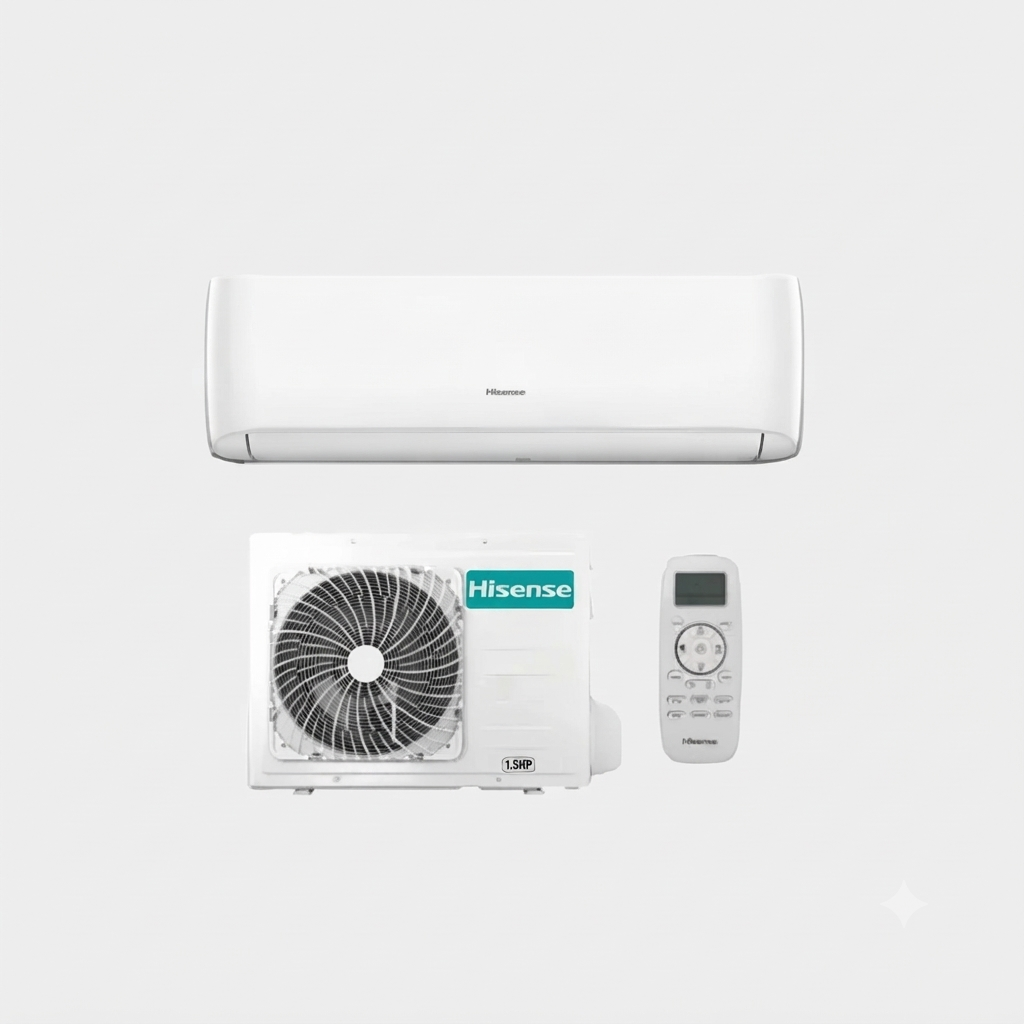
A. Wall-Mounted Split Air Conditioners
Come usare il climatizzatore in inverno? Scoprilo con Hisense!
it.hisense.com
Split air conditioners are among the common choices for residential and office applications.
They typically consist of an indoor unit and an outdoor unit connected through refrigerant piping and electrical connections.
The indoor unit distributes conditioned air into the room, while the outdoor unit houses key components involved in heat exchange.
Advantages may include:
- Convenient wall-mounted installation.
- Suitable options for bedrooms and living rooms.
- Remote control operation.
- Different cooling capacities.
- Advanced features on selected models.
B. Inverter Air Conditioners
Hisense 9000 BTU Wall Split Air Conditioner With WiFi, Inverter Expert R32, Energy Saver (AS-09TW4RYRCJ01B, 2026 Model)
impala.co.tz
Inverter air conditioners use variable-speed compressor technology to adjust cooling output according to the room’s requirements.
Instead of relying entirely on repeated full-speed starts and stops, the system can regulate compressor operation.
Potential benefits include:
- More consistent indoor temperatures.
- Improved energy efficiency under suitable operating conditions.
- Reduced temperature fluctuations.
- Potentially quieter operation.
Actual energy savings depend on the model, room size, installation quality, outdoor temperature and usage patterns.
3. Understanding Air Conditioner Capacity
One of the most important considerations when purchasing an air conditioner is cooling capacity.
Cooling capacity is commonly expressed in BTU per hour.
A unit with insufficient capacity may struggle to cool a room effectively, while an oversized system may not operate as efficiently as intended.
Factors that affect the required cooling capacity include:
- Room dimensions.
- Ceiling height.
- Number of windows.
- Sunlight exposure.
- Number of people regularly occupying the room.
- Electronic equipment generating heat.
- Insulation and ventilation conditions.
For example, a bedroom with limited sunlight may have different cooling requirements from a large office with several computers and occupants.
It is advisable to seek professional guidance when determining the correct air conditioner capacity.
4. What Is Inverter Technology and Why Does It Matter?
Inverter technology is an important feature to consider when comparing modern air conditioners.
Traditional fixed-speed systems generally operate by switching the compressor on and off to regulate temperature.
Inverter systems can vary compressor speed depending on the cooling demand.
This can help maintain more stable indoor temperatures and improve energy efficiency under appropriate operating conditions.
When comparing Hisense inverter air conditioners, consider:
- Rated cooling capacity.
- Energy efficiency information.
- Noise levels.
- Operating modes.
- Warranty coverage.
- Installation requirements.
5. Features to Consider Before Buying
Before selecting a Hisense air conditioner, pay attention to the following.
Cooling Capacity
Choose a unit suitable for the size and conditions of your room.
Energy Efficiency
Compare the energy efficiency ratings and specifications of available models.
Noise Levels
If the air conditioner will be installed in a bedroom or office, consider its published indoor and outdoor noise levels.
Operating Modes
Some models provide cooling, fan, dry and heating modes, depending on their specifications.
Air Filtration
Check the available filters and air purification features if indoor air quality is an important consideration.
Remote Control
Remote controls make it easier to adjust temperature and operating settings.
Warranty
Confirm the applicable manufacturer’s warranty and installation conditions.
6. Tips for Maintaining Your Air Conditioner
Proper maintenance can improve performance and help extend the useful life of your air conditioning system.
Consider these maintenance practices:
- Clean or replace filters according to the manufacturer’s recommendations.
- Keep the outdoor unit free from obstructions.
- Ensure that air vents are not blocked.
- Schedule professional servicing as recommended.
- Check for unusual noise or changes in cooling performance.
- Follow the manufacturer’s operating instructions.
- Ensure that installation is carried out by qualified personnel.
Regular maintenance is especially important for systems used frequently.
7. Professional Installation Matters
Purchasing a quality air conditioner is only part of achieving good cooling performance.
Proper installation is equally important.
Incorrect installation can affect cooling efficiency, system reliability and overall performance.
A qualified installer should assess:
- Appropriate indoor unit positioning.
- Outdoor unit placement.
- Electrical requirements.
- Refrigerant piping.
- Drainage arrangements.
- Ventilation and clearance requirements.
Always follow the manufacturer’s installation guidelines.
8. Where to Buy Hisense Air Conditioners in Kenya
If you are looking for genuine Hisense air conditioners in Kenya, Hisense Kenya can assist you with product enquiries and purchasing information.
We are an authorized Hisense dealer located at:
Hisense Kenya
Tatu Arcade, Taveta Road, Nairobi, Kenya.
Phone: +254 721 563 535
Email: info@hisense-kenya.co.ke
Website: https://hisense-kenya.co.ke/
Contact our team to enquire about available air conditioner models, cooling capacities, prices and warranty information.
Conclusion
A suitable air conditioning system can make your home or workplace more comfortable.
Hisense air conditioners offer different capacities, technologies and features designed to accommodate different cooling requirements.
Before purchasing, consider your room size, cooling needs, energy efficiency, installation requirements and warranty coverage.
Visit Hisense Kenya to explore available Hisense products and enquire about the right air conditioner for your space.




 Chest Freezer
 Coolers
 Water Dispenser